Showing posts with label OUGD504. Show all posts

Thursday, 2 January 2014

DESIGN PRODUCTION - BRIEF 3 - EXISTING WEBSITE ANALYSIS

As for part of my outcome I will be proposing a redesign of the current Windowfarms website I decided to analyse the site, reviewing its functionality, navigation and aesthetics. Reviewing aspects of the site will allow me to highlight problems that my outcome can resolve, improving the online aspect of the company and integrating it with the rest of my project branding.


HOMEPAGE

Upon opening the site users are greeted with the homepage, it acts as an introduction to the company, giving users a view of the product in action while providing some brief information on the project and general movement. 

Although the site offers users a quick introduction to the product and company the focus is on the image and the sponsors located at the bottom of the page. I believe that the site would function more effectively if more focus was directed at the content introducing the audience to the company product. 

Additionally, I think that including photographic aspects is important as it gives the audience a chance to see the product in use, this simply cannot be achieved through the application of illustrations as they do not achieve the realistic situation viewers can associate with.


WHAT IS A WINDOWFARM?

The navigation bar for the site is located at the top of the page, when a users clicks on the title a drop down menu of additional links is revealed. The drop-down works effectively at allowing users to access a range of different pages and reduces the amount of page links on the navigation bar. 

The 'What Is A Windowfarm?' page offers users an in-depth introduction to the product, how it works, sustainable factors and possible produce. The page is important to the sites success as it offers users important information about the product and how it works. Often, before people engage with the outcome or company they will want to overlook an in-depth review of the product and why it is beneficial. Therefore, a page introducing people to the technology and how it is relevant to them is essential to the success of the company. 

Additionally, to help communicate information about the workings of a Windowfarm, moving gif. images have been applied that showcase the function of the product. The illustrations have been applied really effectively and offer users a more interactive view of how the product works. Furthermore, this helps to communicate aspects of the function and therefore results in the requirement of less explanatory content.


WHAT GROWS WELL?

Another important aspect of the site is the 'What Grows Well?' page. In this section of the website users are shown a list of vegetables, herbs and flowers that can be grow in a Windowfarm. 

The page enables both new and old users to refer to a list of established plants that will grow if planted in a Windowfarm. Not only can users refer to this list when purchasing seeds, but it also displays to new users what can be grown in a Windowfarm should they choose to engage with the project. 

With regards to aesthetics, the website features photographic imagery of each plant that can be grow. I believe visually supporting information is a very important aspect of the 'What Can Be Grown' page as it allows people with little or no growing experience to see what the individual plant looks like. When re-designing the page I will ensure that imagery or illustrations of each individual plant is included.

Although this page is successful, I believe that it would be more effective if users could click on the plant displayed and review its individual growing conditions. This way, users could then not only see what could be grown, but the conditions in which the plant thrives in. The provided information could then be applied by users to adjust the microclimate of their windowfarm accordingly.


COMMUNITY WELCOME PAGE

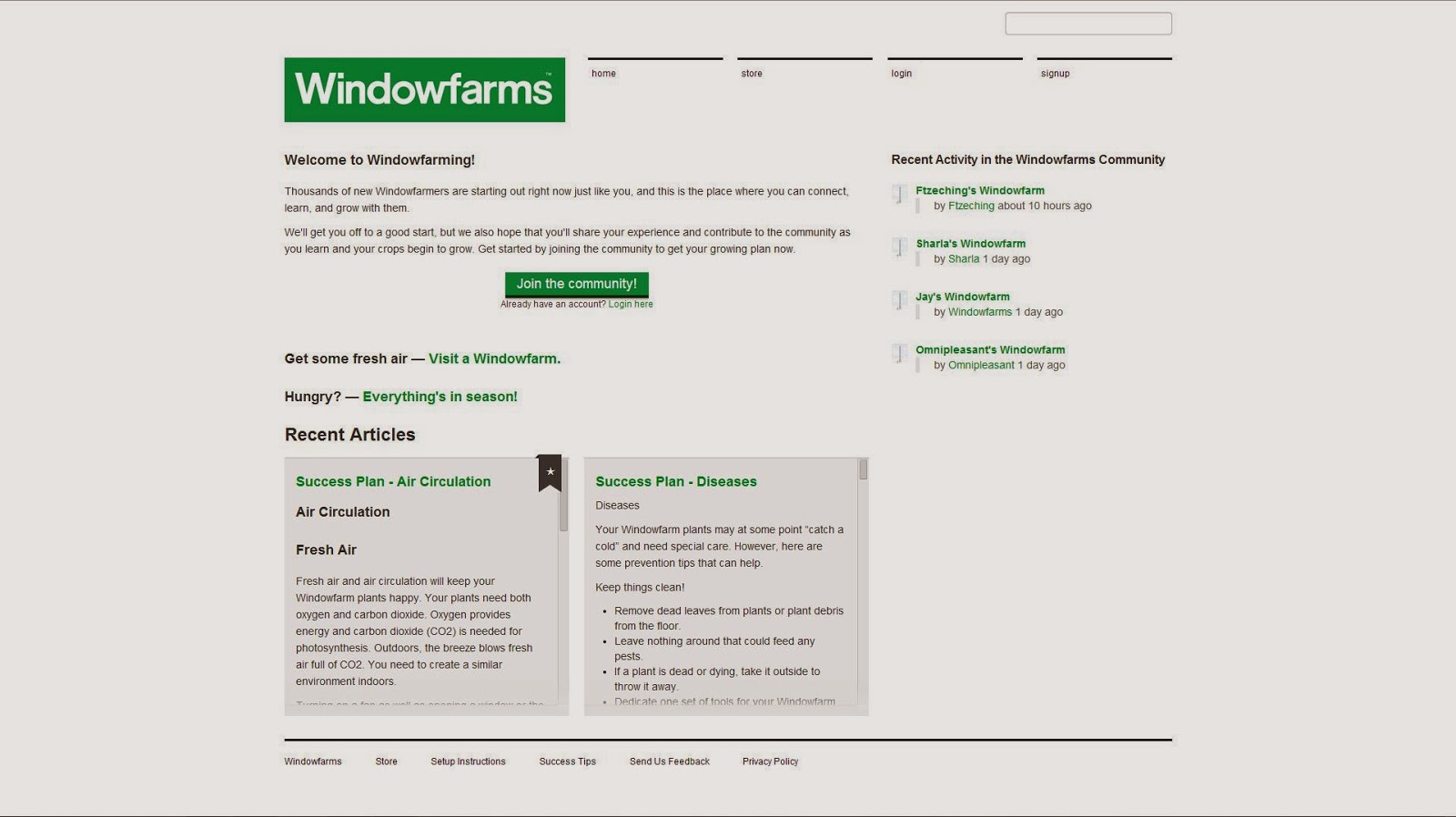
The next section of the site I chose to review is the page that users are greeted by once they click on the 'community' section of the navigation bar. Upon first opening the page the audience are greeted by a brief introduction to the community, some recent articles, a link for joining and some recent activity which has a live update feature applied. 

The pages main function is to act as an introduction to the Windowfarms online community, and direct users to the log-in/sign up section of the site. Although this is successfully achieved, I believe that the pages function could be improved with the application of more attention grabbing features. At the moment, the page looks very bland and uninviting as the page consists prominently of small text with little variation. 


COMMUNITY LOG IN 

Once users click on the 'Join the community' button featured on the community homepage they are taken through to an additional page where details are entered. 

With regards to aesthetics, the page is very plain and applies only the bare bones of the websites skeleton. I believe that the site could be improved if this log in window popped up on the community homepage, or if in fact it was included on the community homepage. Doing so would reduce the number of pages the user has to navigate through to land on certain pages of the site and hence improve navigation.


COMMUNITY HOMEPAGE

After logging in, users are forwarded to the 'our.Windowfarms' community homepage, which acts as a platform for all of the additional pages that span from the community. I believe that this is one of the most important aspects of the site, as the community provides users with the platform to exchange information regarding all aspects of the Windowfarm, from its complete construction to the different growing process applied to plants. 

The Windowfarms community homepage is very busy, users are greeted with a mass of information and links relating to a range of different product related articles and threads. Although there is a lot of useful information available on the page, I believe that the way in which it is presented is a bit overwhelming. Users would benefit if the content was organised in a more refined, chronological fashion, allowing them to quickly navigate the available content to find the information needed. 

With regards to the aesthetics, the community page seems to utilise a different logo, navigation bar and applies a banner image, making the specific page different from others previous to it. Personally, I believe that this affects the sites aesthetic quality as it makes the individual page indifferent to others, affecting consistency and making the website look disjointed. When re-designing the site I will ensure that I keep all pages in theme to keep the website consistent and in theme.


STORE 

The final page that I reviewed was the online store, which is used as a platform for the sale and distribution of a range of products directly relating to the Windowfarms product and company.

Firstly, the navigation and functionality of this page is much more successful that others reviewed before it. The content has been organised into a structured, easy to follow composition that allows users to see information relating to their account and cart, but also the products available online. An additional aspect I thought was really effective was the division of the products. The site divides the products into specific sections such as 'Plants/Nutrients/Seeds' and 'Accessories', allowing users to select specific product ranges instead of having to scroll through a range of goods. 

Additionally, an important aspect of the page relates to the aesthetics, specifically the application of product images. Each of the items available on the online store are visually supported with imagery allowing the user to review what they are buying. I think that this is an important aspect of the online store as the product images allow members of the audience to review what they are buying, giving them more confidence to make the purchase. 


Wednesday, 1 January 2014

DESIGN PRODUCTION - BRIEF 3 - AESTHETIC RESEARCH

BRANDING - PHILIP SANTA - Iaz studîersch zeîn jour und nor wearsch korbflickr?

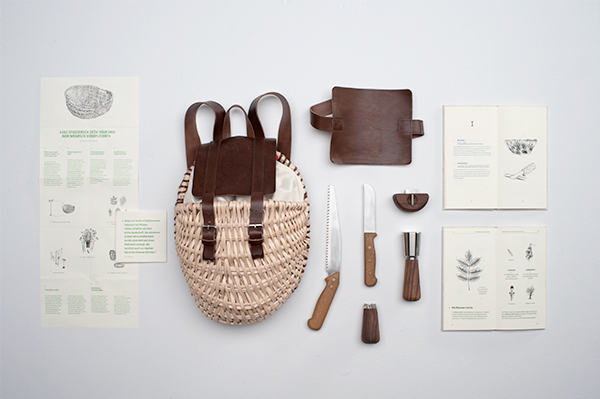
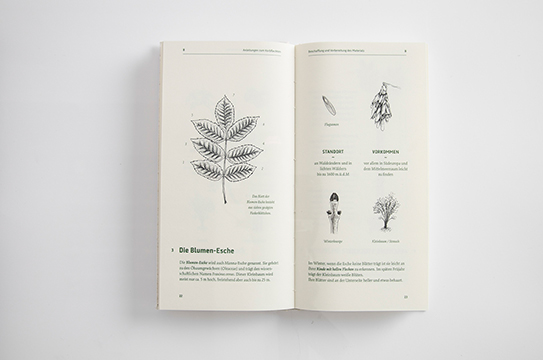
The project displayed below was created to inform and educate the audience about the lost art of basket weaving while simultaneously making it accessible to a new audience. To communicate the concept the designer has created a range of simple, well composed booklets and posters to display information supported with beautifully rendered illustrations. 


  • The project is successful as it effectively applies a consistent layout and well represented aesthetic theme across all outcomes.  


  • Images help to capture and communicate the heritage behind the craft.


  • The simple, one colour plant drawings are effective as their detail is attention grabbing and entices the audience to further interact with the projects content. 


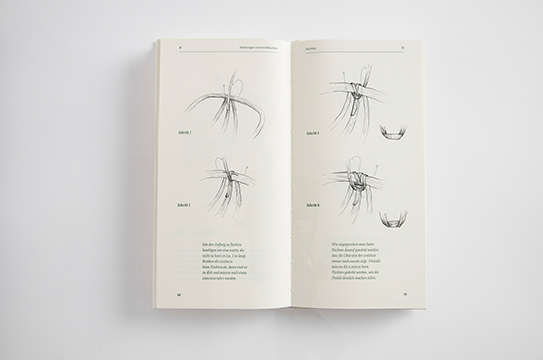
  • Finally, the booklet instructs users as to how to weave their own basket. The complex technique uses step by step illustrations supported with focused information to help guide the viewer through the construction process. When formulating my response I want the 'Build-guide' to communicate the Windowfarms construction process in a similar manner.  


IDENTITY - LISA NEMETZ - VQV

Next, I reviewed a branding project created for 'VQV' an organic food restaurant. The project has relevance as it communicates similar aesthetic themes relating to sustainability and organic produce. 

  • The logo effectively communicates the companies organic ethos through the application of plant/leaf symbolism. 


  • The natural green colour scheme has been carefully selected to reflect the nature of the products sold in the restaurant. Additionally, it also simultaneously represents organics, nature and sustainability. 
  • Moreover, the detailed plant illustrations applied across the project are also relevant to the concept of the branding and act as a visual prop to engage the audience. 


  • The project has a strong concept and is appropriate represented through the use of an appropriate logo and colour scheme. Despite this, I believe that the project could have benefited from a more relevant stock choice, such as an off white/brown recycled paper.
  • When creating my outcome I will carefully consider stock colour and how it could also be used to further support the sustainable/natural aesthetic image outlines. 


INFOGRAPHIC - MANUEL BORTOLETTI - Infodesign for local agriculture

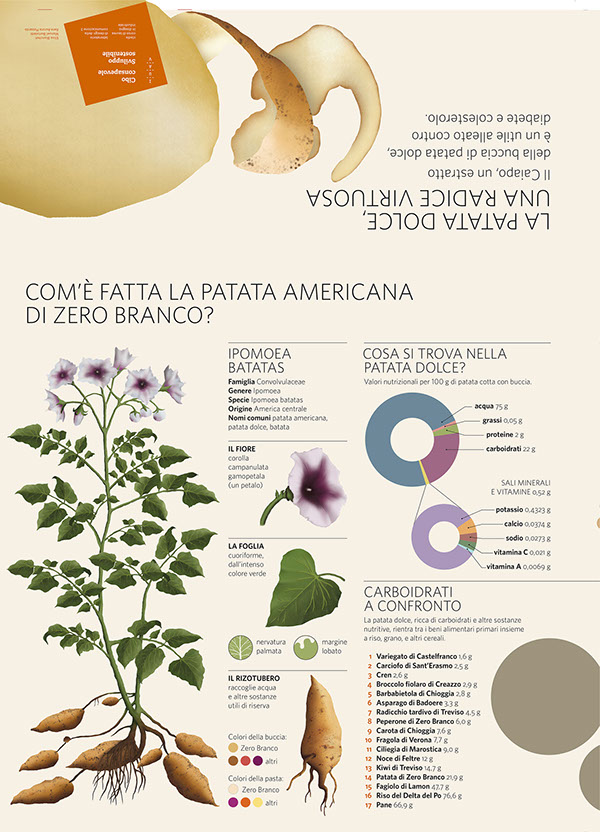
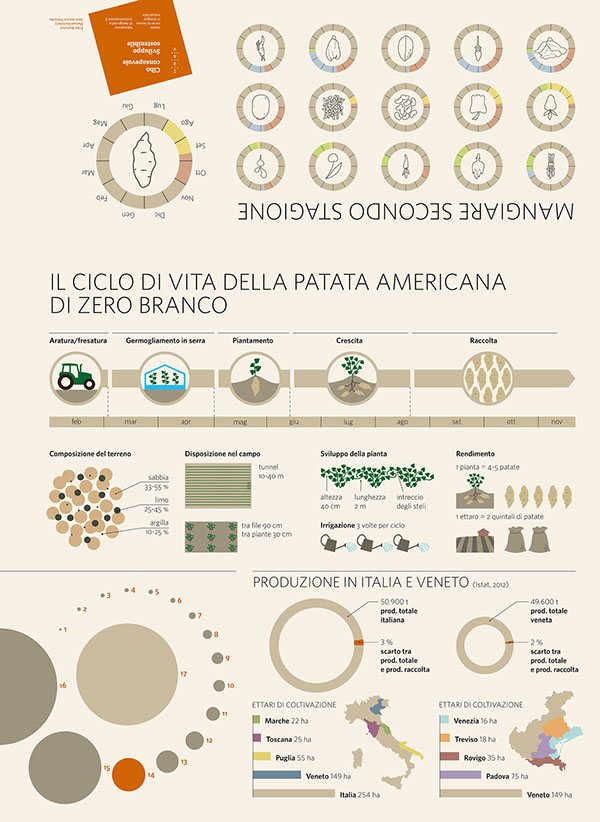
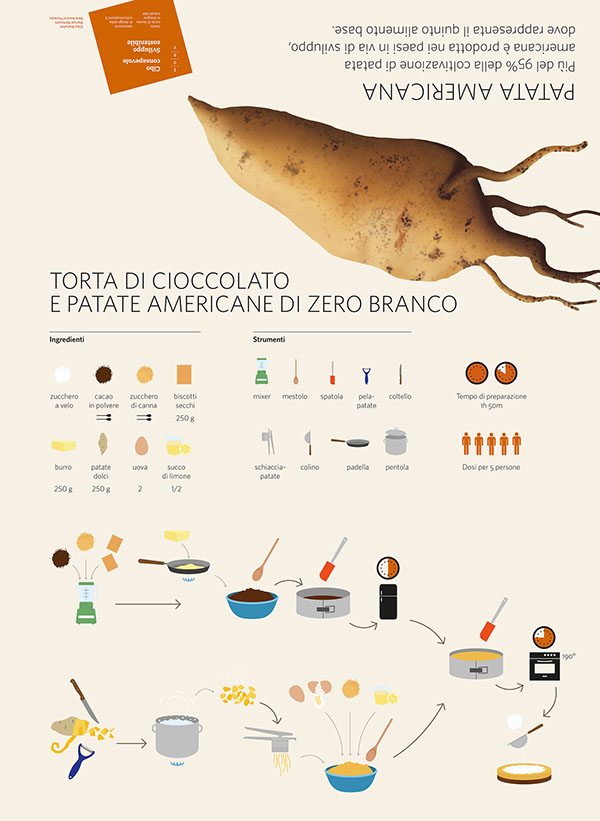
Below is an inforgrqaphic design project that communicates information regarding a selection of crops that grow in Italy. Moreover, The project utilises plant illustrations, data visualizations and informative content to make the information interesting and easy to digest. 

The project holds relevance to my outcome as data regarding the growing conditions of crops is communicated in a way that would also benefit my audience. In my grow guide I want to display data relating to the crop cycles and optimum harvest time, infographics similar to these could be used to successfully deliver this information. 


  • Pie chart variations have been applied to communicate data regarding mineral and nutritional information. 


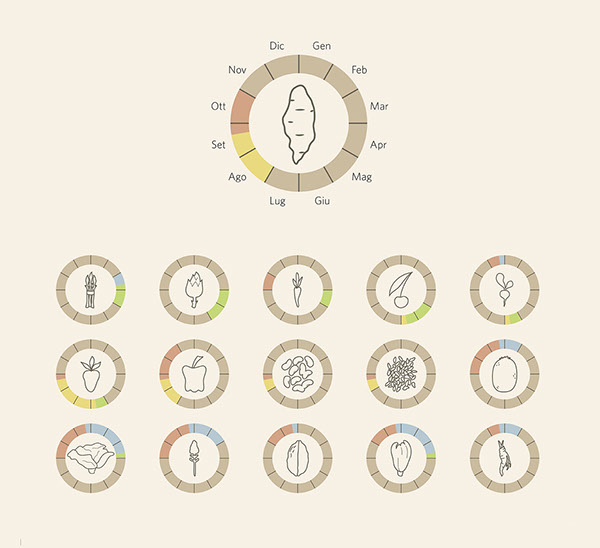
  • The diagrams above visualize information regarding the planting and harvest times for specific crops. Similar diagrams could be used to successfully deliver information regarding plants for my outcome.  


BRANDING - ALEXANDROS MAVROGIANNIS - The Living Co. 

The Branding showcased below was created for an organic trade store called 'The Living Co.' The aim of the re-brand was to give the company a rejuvenated identity to help them become popular again. 

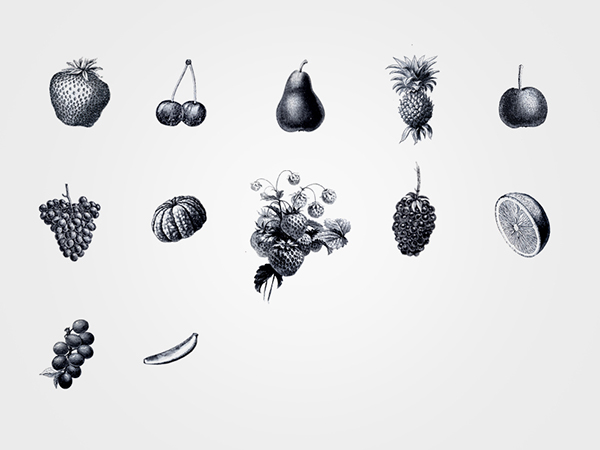
The branding contrasts vintage, etching style illustrations with a bold modern typeface to create an engaging aesthetic that captures the audiences attention. One thing that really stood out to me was the application of etching style vegetable illustrations. As a creative their detailed aesthetic captured my attention immediately while simultaneously supporting the organic ethos of the company. The application of the illustration was so effective I was inspired to experiment with creating a similar aesthetic image for my outcome.


  • Etching style illustrations.


  • A strong contrast is created between the detailed, mono-tone fruit illustration and the simple, bright logo.


BOOK -  Herbarium.

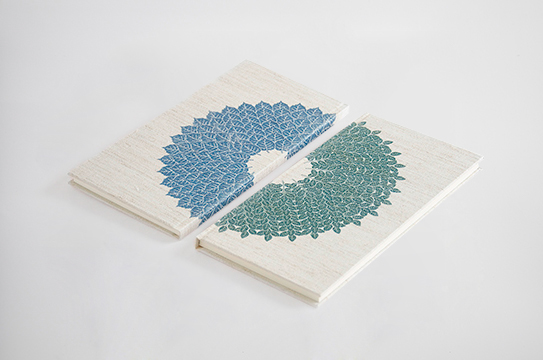
Finally, the book 'Herbarium' was created as a publication in which flowers, leaves and petals can be pressed and stored, eventually creating a physical dictionary of your collections. The concept behind the book holds no relevance to my outcome as I do not want to press flowers into it. However, the simple typographic aesthetic, choice of natural looking stock and application of packaging are all inspiration for my project. 

Firstly, the typographic book cover, although simple, has a certain inviting elegance about it, that entices the audience to further engage with its contents. My outcome could feature a similar, simple aesthetic to contrast the image heavy content within the booklets pages.


HERBARIUM wood box - folder book - olive - flowers - leaves - petals - plants - vintage design HERB6001GB
  • Finally, the choice of packaging also effectively rounds the project off, acting as a way to protect the booklet and make it more presentable. I believe that my printed outcomes could really benefit from similar packaging. However, I will need to consider how it could be completely sustainable like other aspects of my project.


DESIGN PRODUCTION - BRIEF 3 - GROWING GUIDE RESEARCH

After initially defining what will be produced in response to the brief I realized that I needed to collect more research. The grow guide will inform users of growing techniques, nutritional information and general plant upkeep, however I currently have no information on these areas and therefore further research needs collecting. 

Unfortunately, due the tight timescale of the project I have no time to collect primary research into these areas, and therefore will have to rely on secondary research collected from books and the internet. Luckily the Windowfarms website offers all the information needed through their online community, posts are made openly available offering information on plants and growing. Additionally, there are also sections addressing solutions to common problems. 

The nature of the information is very relevant and applicable to my outcome as it directly relates to my project, and audience. Moreover, the information is also reliable as it has been composed by people the people producing the commercial project as well as people involved in their own personal D.I.Y grows. 

The information was divided into six main sections each relating to the up keep of a windowfarm and the plants that inhabit it. My guide could communicate information regarding each of these six sections to ensure my audience can successfully grow and maintain their windowfarm.


  • Light
  • Water.
  • Compatibility.
  • Nutrients.
  • PH & Feeding.
  • Diseases.  

LIGHT & LIGHT LEVELS

The first section on the list was light. It is made apparent that light is not a massive issue if you select your window wisely and your garden receives at least four hours of natural light each day. However, to get the most from your plants users need to optimise growing conditions for the plants, to achieve this the addition of a grow light is required, a piece of equipment that is available on the online windowfarms store.


  • Unless your garden sits in a window which receives direct sunlight for a few hours a day then users will need to install supplementary lighting above the grow area.
  • I will ensure that my guide highlights the importance of choosing the correct window, users should analyse the amount of sunlight each window receives to help them select the optimum space for growing. 
  • Growlights are available on the windowfarms store (online website)
  • The LED growlight provides supplementary light by delivering a combination of red and blue spectrum light that your plant needs to thrive and grow. Additionally, the LED lights don't use a lot of electricity and are designed to work alongside any daylight that reaches your plants to ensure that the optimum amount of light reaches them. 
  • When installing the light place it approximately 3-inches from your plants, ensure that this distance is increased if the light emits any heat. Moreover, users will need to continue adjusting the lights position as the plant grows higher.
  • The more light that the plants receive the more they will thrive!
  • Baby plants need around eight-teen hours of light to thrive, however more mature plants require less, around ten hours is the minimum amount of light a larger plants needs to grow well.


WATER

The next section covered by the website was an important one, water.

  • You need to water your plants if you want them to grow and thrive, one default watering schedule is once every hour for fifteen minutes. When deciding the increments for your watering schedule ensure that you take into consideration that different plants thrive on varying levels of water. 
  • The second part of watering is the flow rate, it should be enough to create a steady drip of water through the system even when the water supply goes a few inches below the minimum fill line of the reservoir. 
  • A flow that is too high will unnecessarily consume power and create noise. On the other hand a flow that is too low will not deliver liquid to the top planter.
  • Each windowfarm has its own microclimate (refer to section...) which is effected by outside elements such as the temperature outside to the varying humidity of the house. The watering frequency and rate may need to be adjusted to compensate for the small changes a microclimate can undergo, otherwise the plants could die. Keep an eye out for the signs listed below and adjust the water accordingly. 
  • UNDER WATERING - If the plants are under watered the clay pellets will become too dry and the plants will be staved of nutrients and water, this can lead to root damage and the death of the plant.
  • If your plants are wilting them it is a sign that the watering frequency needs increasing.
  • Regularly check your water flow and make sure that water goes up and down the tubes at a consistent rate. If the flow rate is inconsistent it can mean that the reservoir needs more water. Check that the reservoir water is full and also make sure that the pump is not set too low. 
  • The default recommendation is to water plants once an hour. However, if plants are wilting and the clay pellets are dry experiment with increasing the water flow.  By experimenting with the water flow of the Windowfarm you will find a schedule that allows your plants to thrive. 


  • OVER-WATERING -  If the plants are severely over-watered green algae will begin to grow on the clay pellets, the plant may begin to look yellow as it will take up too much water and not enough nutrients. Additionally, the roots can become brown and slimy from the lack of oxygen.  
  • If you suspect that the plants are being over-watered remove the net cup from the bottle and assess the roots as this is the best way to tell if the plant is being over-watered. If the roots look brown and slimy and there is also fowl Oder then this is a sign that bacteria is present and is growing on the oxygen depleted roots. 
  • If the plants are being over-watered try decreasing the frequency for each watering.
  • WATER SUPPLY - Water will naturally evaporate from the system and so the reservoir will need to refilled. Expect to add water to the reservoir around 2-3 times a week. Despite this you need to be observant as the conditions of the microclimate will vary and affect the rate at which water is needed.
  • Wet humid conditions will require less additional water than dry heated environments that require more frequent reservoir top-ups. 


  • WATER CHANGING - It is recommended that the water in the reservoir is completely changed once a week, this will ensure that your plants are receiving the optimum amount of nutrients needed for vigorous growth. 
  • You may find that plants respond well to the cleaning period, or 'flushing'. Flushing is where you run clean water or water with a salt remover through the roots instead of your usual nutrient solution. Flushing should only be done a few days at a time to mature and well established plants.
  • Each time you replace the water in the reservoir you need to ensure that the correct amount of fresh nutrients are added, and that the waters pH is at the optimum level. Remember to always add the nutrients first and then adjust the pH accordingly (see section...).
  • Sometimes tap water is not best suited for watering purposes due to high amounts of chlorine and fluoride, try letting the water settle overnight in a bucket to let the minerals dissipate, then use the clean water in the system.  
  • WATER STAGNATING - Stagnant water may look slightly scummy on its surface and is bad for your plants. To prevent your water from becoming stagnant oxygen needs to be regularly pumped through it, if water continues to become scummy increase the flow of oxygen.  
  • Solution two - If the pump is running too infrequently the reservoir water may become stagnant. To overcome this problem simply increase the frequency of the watering schedule. 
  • Solution three - Another solution to a continuing stagnant reservoir water problem is to buy a second pump to pump extra oxygen into the water. 


COMPATIBILITY 

Next, the website covers compatibility, specifically referring to the comparability of the plants/vegetables and the micro-climate that users will create. 


  • A microclimate is the environment which users create when they build their windowfarm, it is made up from elements such as sunlight (artificial & natural), fresh air, temperature and humidity. Each of these elements is affected by changes in the outdoor weather, the different seasons and varying indoor conditions. 
  • If plants look unhealthy or start to die it could be due to a clash between the plant and an element of the microclimate, by knowing the characteristics of the specific plants grown users can optimise growing conditions and account for any changing elements that could affect plant growth. 
  • Another factor that can affect the growth of your plants is their compatibility, some plants will grow well together and others will not. For examples, some plants prefer different amounts of water and fertilizer, lettuce flourishes with very little quantities of nutrients, where as basil does not. The amount of nutrients required to grow a batch of healthy basil would be harmful to the growth of a lettuce. Therefore, when selecting plants for the windowfarm considerations must be given to these varying factors. 
  • Once way to overcome plant incompatibility is to simply follow the guide an add an additional column to the windowfarm, any plants that clash can then be placed in separate columns to avoid any harm. 
  • The problem could be to do with light, as different plants thrive with varying amounts of light. Tomatos love lots of light and are happiest in a warm, light filled window, contrasting this, kales optimised growing conditions cooler temperatures and partial sunlight.
  • Some plants are incompatible with each other and do not get along in a growing environment, for example, strawberries can impair the growth of plants in the cabbage family such as broccoli, cauliflower and kale. 
  • This section works well at informing users about some of the reasons compatibility can be a problem, but does not offer users the information needed to check if their plants and microclimates are compatible. My guide could include information on the plants optimized growing conditions and compatibility with each other. 


NUTRIENT FEEDING 

After compatibility the site informs readers about nutrient feeding, this is applicable and also important to my target audience as the bioponic system utlilsed by Windowfarms feeds plants using an organic nutrient additive which is mixed with the systems water.


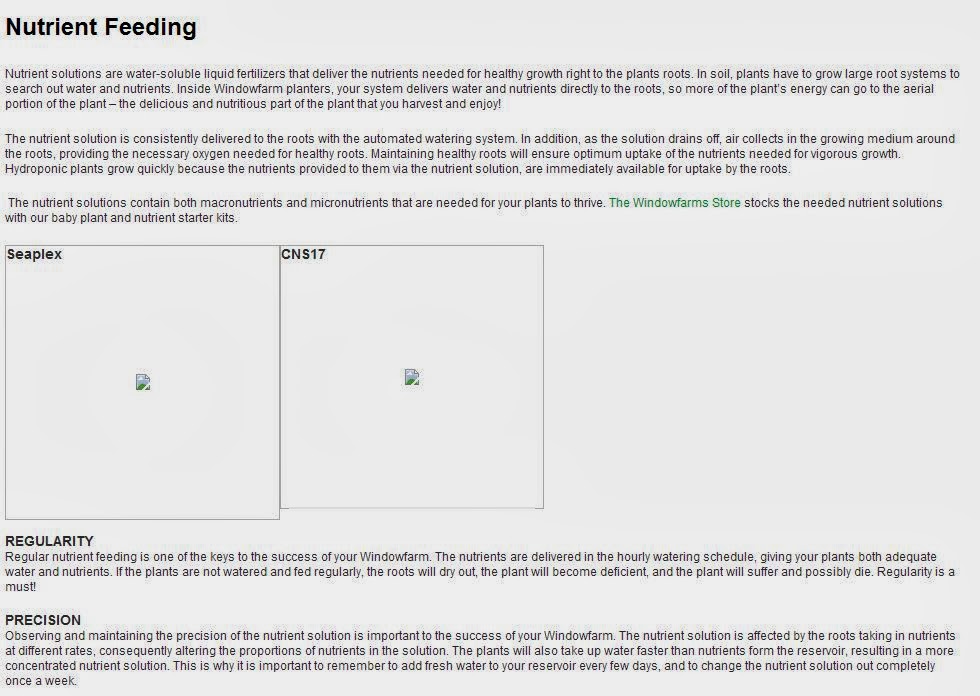
  • Nutrient solutions are water soluble liquid fertilizers that deliver the nutrients needed for healthy growth straight to the plants roots. When grown in soil plants have to grow a large root systems to search for water and nutrients.  However, the delivery of nutrients and water straight to the plants roots means that the root system is no where near as vast and focuses more of the plants energy on aerial growth. The nutrient solution is consistently delivered to the roots of the plants through the automated watering system installed when building the windowfarm.  
  • The system is built in a way that allows the nutrient solution to drain off allowing oxygen to access the roots, this process provides the roots with the necessary amount of oxygen needed for healthy growth.
  • Maintain healthy roots will ensure the optimum uptake of the nutrients needed for vigorous growth. Hydroponic plants grow quickly because all the nutrients they require are provided to the via the nutrient solution. 
  • The nutrient solution contains both macronutrients and micronutrients that are needed for your plants to thrive.
  • REGULARITY -  Regular nutrient feeding is on of the keys to the success of your windowfarm. The nutrients are delivered to your plant by the hourly watering schedule giving your plants the adequate water and nutrients needed. If the plants are not watered and fed regularly the roots will dry out can the plan can become deficient.  
  • PRECISION - Observing and maintaining the precision of the nutrient solution is also key to the success of your plants. The nutrient solution is affected by the roots taking in nutrients at different rates, consequently altering the proportions of nutrients in the solution. Moreover, the plants also take up water faster than the nutrient solution resulting in a more concentrated nutrient solution, this is one of the reasons it is important to regularly add fresh water to your reservoir and change the nutrient solution. 

  • My grow guide will include a similar table to allow users to quickly refer back to information regarding nutrients and plant feeding.


EC, TDS & PPM

While browsing through the online community I came across some additional information that has relevance to the points covered in the nutrients section displayed above.


  • EC (electrical condustivity), TDS (total dissolved solids) and ppm (parts per million) are units for measuring the strength or concentration of the nutrient solution. They all measure the same thing, but different growers prefer to use different units of measurement. However, the most accurate, reliable and available unit is EC.
  • To read the EC of a nutrient solution users will need to purchase a special meter available at the online windowfarms store. The devices are expensive, but are one of the most helpful tools a windowfarmer can have.
  • By measuring the EC of the nutrient solution growers can precisely determine if the plants are receiving the proper amount of nutrients needed for vigorous growth. As mentioned in the compatibility section of the guide, different plants require different amounts of nutrients. More nutrients in the reservoir makes for a higher EC level. 


PH 

The next topic covered is pH and refers to the levels of acid and alkaline in the windowfarm system. 


  • The table displayed is really useful as it provides users with an understandable visualization of the specific nutrients available to plants and at what pH level they are most apparent. My guide could include a similar reference table for users.
  • pH is a scale that measures a growing mediums acid to alkaline balance. Although there are certain plants that prefer more acid or more alkaline based growing medium, for your windowfarm plants to thrive the pH must maintain a range of 5.5-6.5.  Maintaining the pH within this range ensures that all of the necessary nutrients are provided in the reservoir and are freely available to the plants.
  • Once the windowfarm is set up growers will need to add the nutrients to the bottom reservoir. After adding the nutrients the pH levels of the mix will need adjusting using baking soda or vinegar.
  • Each time that the system is flushed, and the water replaced (see water section) you will need to text the pH levels using the pH testing kit provided in the pack.


  • The above information was taken from the Maintenance section of the build guide, in my outcome this information will be displayed in the grow guide as it holds more relevance to the content featured.
  • To test the pH of the solution first immerse the testing strip into the reservoir solution for a few seconds. 
  • Next, remove the strip from the water and wait around 10 seconds. Then compare the colour of the strip to its closest match on the reference card. The pH of properly balanced water is 7.0 - 7.5. You want the nutrient solution to be in this range so that the plants' roots can most effectively absorb the nutrients. 
  • The most common time the pH will need checking is after new nutrients have been added or after the systems water has been replaced.
  • In order to raise the pH level you need to make your own solution more basic. The simplest way to do this is to add a pinch of baking soda. In order to lower the pH level you need to make your solution more acidic. The simplest way to do this is to add a few drops of distilled vinegar to the solution.
  • After applying the baking soda and/or vinegar wait for everything to dissolve into the solution, then, retest the solution's pH to ensure the levels are optimum. 


DISEASES 

The final main section of the online guide relates to plant diseases, this section is important as a disease is a problem that could completely jeopardize every plant in the windowfarm. 


General rules/checks.

Keep things clean;
  • Remove dead leaves from plants or plant debris from the floor.
  • If a plant is dying/dead remove it from the farm and dispose of it outside. 
  • Dedicate one set of tools for the windofarm garden.
  • Use a separate set of tools for any other houseplants.
  • After use, disinfect tools with a bleach-water solution.  
  • Wash your hands!
Maintain a good environment;
  • Keep the air circulating.
  • Keep th humidity 50-60%.
  • Remove weak plants because they are susceptible to infestation. 
  • If a plant is infested remove it immediately and dispose of it outside. 
Keep close observation;
  • How does everything look? Healthy, clean and green?
  • Examine the leaves, top and bottom, there should be no bugs or mold.
  • Check the roots, do they look fresh and healthy? or brown and slimy?
  • Check the reservoir is full of water.
  • Check the flow of the watering system.

Sometimes, despite regular checks and a well maintained growing environment, bugs and pests can still find their way onto your plants. In this kind of situation there are certain procedures you can follow to get rid of any pests while maintaining a healthy, chemical free growing environment. 
  • If there are only a few, pick them off one by one and throw in trash/outside.
  • If pests are on one plant it is likely they are also on the others, carefully check each one.
  • Isolate the infected plant to stop any infestation from spreading.
  • Wash the plant with water pressure to force the pests off and down the drain. Repeat daily.
  • Spray plants with a mild dish-detergent solution.
  • Treat plants with Neem oil, made from the Neem tree (good for aphids, spidermites, whiteflies, mealybugs and thrips).
  • Treat with Rosemary oil from Rosemary plants (good for aphids, spirdermites and whiteflies).
  • Invest in ladybugs (completely natural pest control).


Aphids - Aphids arrive and multiply at a terrifying rate. Plant leaves may start to curl up or just not look green and healthy. To check if the plant is experiencing an aphid infestation examine the plant, especially at the underside of the leaf, as this is where aphids are commonly found.

If you are experiencing an ahphid infestation you should;
  • Isolate the infected plant to keep the infestation from spreading.
  • Wash the plant with pressurized water to blast the aphids off.
  • Invest in a colony of beneficial bugs - Ladybugs love aphids!
  • Use organic, cold pressed Neem oil, it can protect your plants from chewing insect and fungal diseases. The oil takes time to remove the pests because of the way it works, it confuses the pests, making them forget to eat, mate and lay eggs.
  • Use safter soap; votes the 'best orgainic treatment insectidal soap by Per Mother Earth News, 2005. The soap breaks down the pests protective cuticles so they quickly become dehydrated. Applications of the soap should be repeated.


Spider mites - A good way to spot if you have an infestation of spider mites is to check for the webs the pests sometimes spin near to the top of the plant. In the beggining of the infestation you may notice small yellow-white specks on the leaves, if this is the case check the leaf underside for the pests. 


If you are experiencing an spider mite infestation you should;
  • Isolate the infected plant to keep the infestation from spreading.
  • Wash the plant with pressurized water to blast the aphids off.
  • Invest in a colony of beneficial bugs - Phytoseiulus persimilis, Neoseiulus californicus and Mesoseiulus longipes all love spider mites!
  • Use organic, cold pressed Neem oil, it can protect your plants from chewing insect and fungal diseases. The oil takes time to remove the pests because of the way it works, it confuses the pests, making them forget to eat, mate and lay eggs.
  • Use safter soap; votes the 'best orgainic treatment insectidal soap by Per Mother Earth News, 2005. The soap breaks down the pests protective cuticles so they quickly become dehydrated. Applications of the soap should be repeated.


Fungus /Root Rot - Roots of plants may decline or die for a number of reasons. Unfavorable environmental elements can result in waterlogged or drought conditions, both are common causes of poor root health. If major roots are affected by the infection the plant can die very quickly. On the other hand, if only small 'feeder' roots are affected the plant will undergo a slow decline and will become unproductive and eventually die. 

Prevention
  • Make sure the windowfarm is in an area with enough ventilation to help reduce excessive moisture.
  • Regularly clean the reservoir.
  • Add 1 tablespoon of hydrogen peroxide (3 - 4% strength) to the reservoir water, then repeat every 5 days.
Treatment;
  • Treat with 1/2 cup of hydrogen peroxide (3-4% strength) per reservoir gallon. Change this solution every 5 days until the situation is under control.


POWDERY MILDEW - Powdery Mildrew starts with a few tiny white spots and can then spread to cover a whole leaf. The disease weakens the plant, causes leaves to turn yellow eventually causing the plant to die. Powdery Mildew is caused by high humidity, possible over-crowing of plants and a lack of air circulation.

Solutions;
  • Isolate the plant from the rest of the plants. 
  • Turn on the fan and keep leaves moving.
  • Lower the humidity in the room (open a window/turn on air conditioner).
  • Use organic, cold pressed Neem oil, it can protect your plants from chewing insect and fungal diseases. The oil takes time to remove the pests because of the way it works, it confuses the pests, making them forget to eat, mate and lay eggs.
Home remedies;
  • Coffee solution; One part black coffee to 10 parts water.
  • Baking soda; One table spoon per gallon, add a drop of heavy dish detergent and a drop of vegetable oil help the solution to bind to the leaves (baking soda raises the pH level reducing mildew growth).
  • White vinegar; One part vinegar to three parts water.
  • Treat with organic funhicide such as 'Safer Gardens Fungicide', it contains a natural sulfur that is toxic to fungus and discourages mildew growth.